Software engineer · AI applications

David Cho

I'm David, a full stack and AI engineer in the Bay Area building production systems, from AI translation platforms and operational backends to the review tools behind them. I've worked across translation, consumer AI, financial operations, and games.

Based in
Bay Area, California
I care about
Useful software · real users
Focus
AI applications · workflow automation

About

A little more about me.

I graduated from Cal Poly in 2025 and live in the Bay Area.

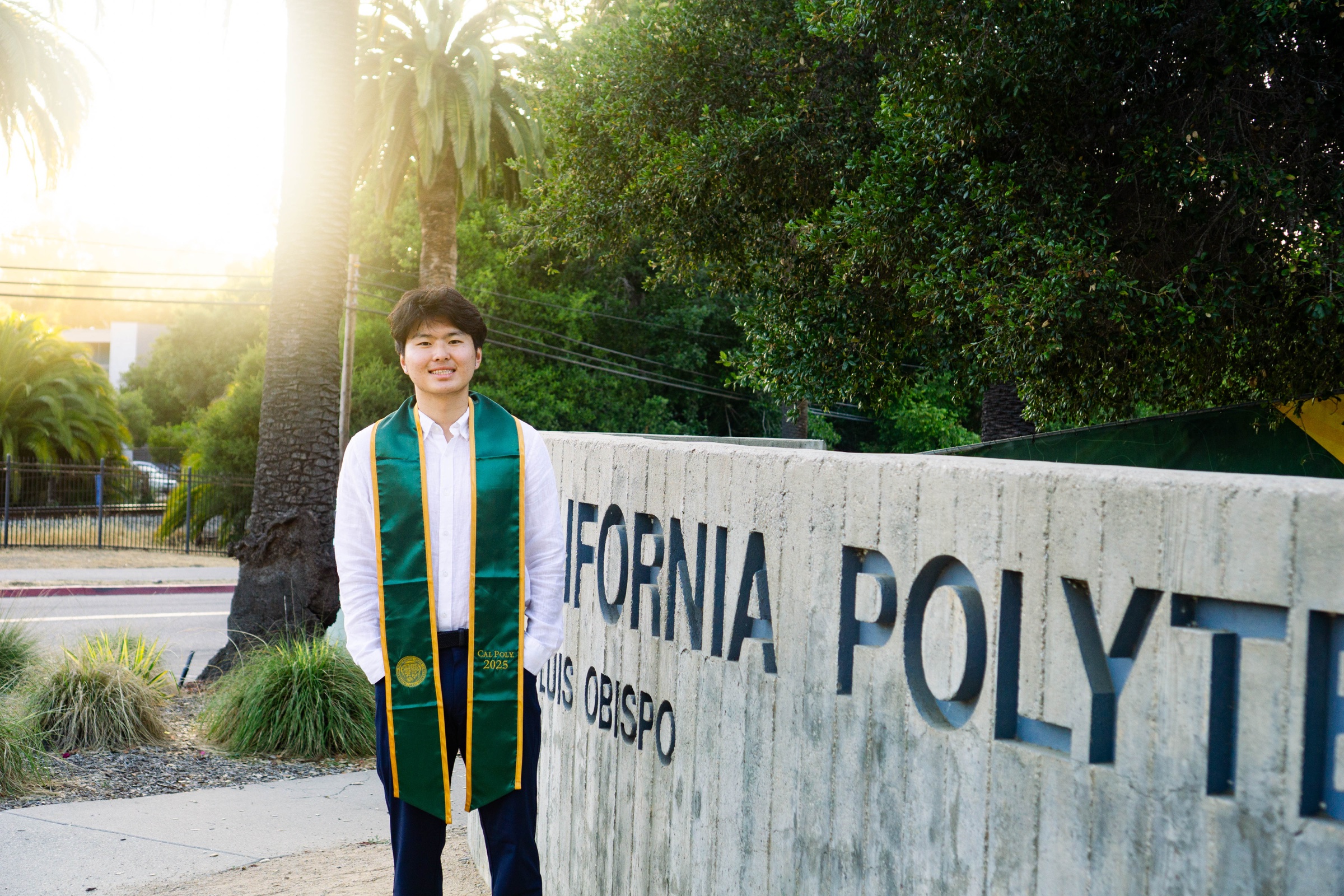
David Cho at Cal Poly San Luis Obispo after graduating with a degree in computer science
Cal Poly, San Luis ObispoB.S. Computer Science · Class of 2025

I'm David, a software engineer based in the Bay Area.

I graduated from Cal Poly in 2025. Since then I've worked at small startups where I could move between backend code, product decisions, testing, and talking with the people using what we built.

I like understanding how a system behaves before changing it. I ask questions, trace the edge cases, build a small version, and test it with real data. Most of the projects on this site came from that process.

LLM applicationsAgents & tool useRAGEvaluationFull stack developmentCloud deployment
Connect with me on LinkedIn

Outside work

A few things that keep me moving and get me away from a screen.

  1. 01

    Jiu jitsu

    Four years in · blue belt

    I like that every round gives me something specific to work on next.

  2. 02

    Camping

    Big Sur

    My favorite place for redwoods, the coast, and a few quiet days outside.

  3. 03

    Travel

    South Korea

    The place I am most drawn to exploring, especially through its neighborhoods and food.

Experience · 03 startups

Three software engineering internships.

I worked at an AI translation company, a decision support startup, and an independent game studio.

01

Liontalk

AI translation startup

Location
Fremont, CA
Period
May to July 2026
Role
Software Engineering Intern

Liontalk builds software for translating and reviewing subtitles. I worked on the Python engine, FastAPI service, React editor, and public site.

What I worked on

The engine parses WebVTT, translates with token alignment, and uses a dynamic program for segmentation and timing. The service adds authentication, rate limits, durable jobs, and Whisper transcription.

Biggest contribution

Built language profiles for eight languages

I put every language rule in a frozen profile, so the pipeline no longer needs language specific branches. Six languages pass the quality gate. French stays Beta at 0.875 characters per second against the 0.9 threshold.

8
languages shipped
6 of 8
passing the quality gate
0.875 / 0.9
French speed versus gate
Read the related case study
02

1-Decision

AI decision support startup

Location
Austin, TX
Period
February to May 2025
Role
Software Engineering Intern

1-Decision built a conversational assistant for busy parents using OpenAI and live SerpAPI results. It had roughly 30 paying subscribers during my internship.

What I worked on

I worked on the Python API, retries, rate limits, caching, request performance, and Stripe subscriptions.

Biggest contribution

Reduced average response time from 1.8 seconds to 1.0 second

I asked the team to prioritize latency before an already planned feature because the wait was noticeable to parents using the product in the middle of a task. The change tripled throughput. The cache handled roughly 10,000 daily calls with a 70 percent hit rate.

1.8s → 1.0s
average response time
throughput
70%
cache hit rate
03

The Verse

Independent game studio

Location
Berkeley, CA
Period
May to August 2024
Role
Software Engineering Intern

The Verse was building Lights Out, a Unity game about a vampire moving through light and shadow.

What I worked on

I owned the PlayerController, including its design, Jira tickets, implementation, tests, and the architecture notes used by six teammates. I also maintained CI and CD and tracked playtester feedback in Salesforce.

Biggest contribution

Rebuilt light detection and restored 60+ FPS

The original system used wide arc raycasts every frame and ran at 25 to 30 frames per second. I replaced it with collider tagged shadow zones, bringing the game to a stable 60 or more. The change touched the core mechanic, so I also made the case to reprioritize it.

25 to 30
frames per second before
60+
stable frames per second after
6
team members using the design docs

Work · 03 projects · 03 full case studies

Choose a project.

Select a project to see the problem, outcome, role, and technology without leaving the section.

Project 01 / 03 · Workflow automation · 2025 to 2026Full case study published

Financial Operations Dispatch

A production workflow that turns translation requests arriving by email into structured, routed work. It combines AI classification, timed escalation, and human review before consequential client communication.

Reported result

80% less manual work

My role
Workflow design and implementation
Stack
Python · TypeScript · Azure Functions · Cosmos DB · Microsoft Graph · GPT-4o